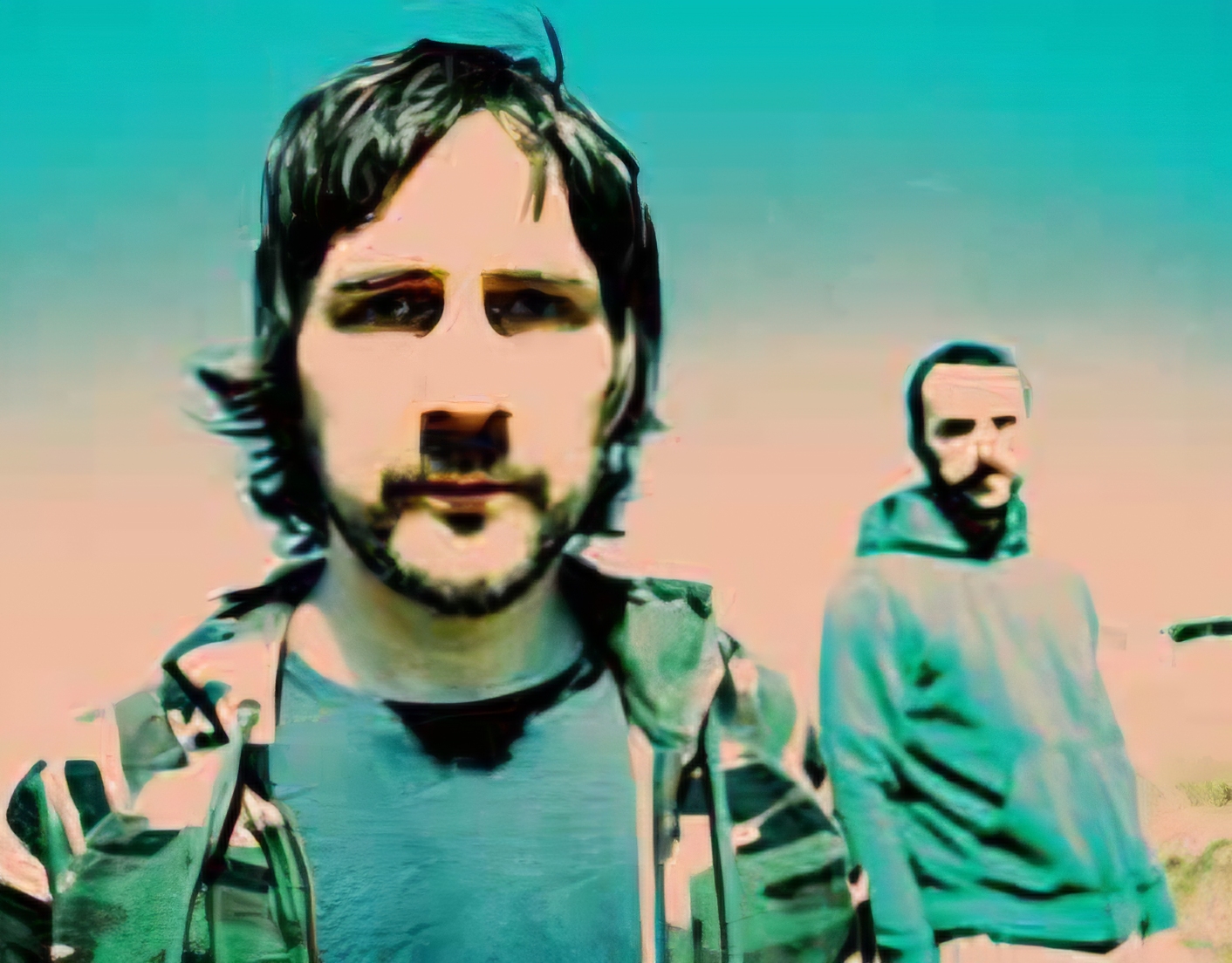
The Liminal space beyond the apparent reality of things.
The mystery of the BOC returns. Fragment by fragment.
Tape 5
https://youtu.be/6bghDcbzfEU?is=WyUCeonDLnPzREMR
Boards of Canada released their first new music in 13 years on April 16, 2026. The track, titled “Tape 05”, is a three-minute ambient piece uploaded to their official YouTube channel. This follows a cryptic promotional campaign involving mysterious VHS tapes sent to fans and posters appearing in cities like London, New York, and Tokyo.
While no official album announcement has been made, the release is widely seen as a sign of a larger project—possibly their long-anticipated fifth studio album, informally called “LP5”.
BOC and Maya”—the illusory sheath of phenomena veiling the noumenal Will, the striving essence beneath reality’s WYSIWYG.
A brief history and considerations on one of the most revolutionary musical projects of the early 2000s.
Sonic echoes beyond the Veil in a Fractured Reality.
Boards of Canada (BoC)—the enigmatic Scottish electronic duo of brothers Michael Sandison and Marcus Eoin—craft soundscapes that feel like half-remembered dreams, warped VHS tapes flickering into the subconscious. Their music, a hypnotic brew of analog synths, crackling field recordings, and downtempo beats, transports listeners the liminal space beyond the apparent reality of things, as one evocative analysis aptly puts it.
In an era of digital overload, BoC’s nostalgic haze pierces the mundane, evoking altered states where time dissolves and illusion unravels.
This alchemical quality defined their revolutionary impact in the early 2000s, blending IDM’s intellect with ambient’s immersion to redefine electronic music as a portal to the unseen.
THE BEST BOARD OF CANADA
https://youtu.be/t47snswgSyU?is=sNncMG8jFldAxMue
From Communal Experiments to Warp Icons.
Formed in the mid-1980s in rural Scotland as a loose collective of artists experimenting with short-wave radio samples and psychedelic visuals, BoC coalesced into the Sandison-Eoin core by the early ’90s, with early collaborator Christopher Horne departing in 1995.
Inspired by ’70s public information films, nature documentaries, and occult-tinged folklore, they self-released cassettes like “Catalog 3” (1987) on their Music70 label, honing a signature warmth amid dissonance—distorted choirs, detuned oscillators evoking childhood unease.
Their breakthrough came via Skam Records’ “Twoism” (1995) and “Music Has the Right to Children” (1998) on Warp, the latter a cornerstone of IDM’s golden age.
By the early 2000s, “Geogaddi” (2002) cemented their revolution: a 73-minute opus laced with numerology (23-track structure symbolizing discord), psychedelic dread, and faux-psychedelic samples critiquing consumerism and introduce Apocalyptic visions.
Influencing acts from Tycho to Radiohead, BoC’s output—sparse yet seismic—explored memory’s fragility, environmental decay, and simulated realities, making them prophets of millennial anxiety.
After “The Campfire Headphase” (2005), a decade-long silence preceded their return.
Tomorrow’s Harvest and “Jacquard Causeway”: Apocalyptic Threads
“Tomorrow’s Harvest” (2013), BoC’s long-awaited fourth album, arrives as a darker harvest—17 tracks of brooding synths and spectral drones forecasting ecological collapse and technological overreach. Clocking 54 minutes on Warp, it’s their most cinematic work, with themes of industrialization, extinction, and overconsumption woven into glacial builds and haunted melodies.
Critics hailed its “nihilistic” edge, a maturation from Geogaddi’s whimsy to post-postmodern meditation.
Opening the album, “Jacquard Causeway” (7:38) is a masterstroke of suspense: loping bass pulses over swelling chords, metallic twinkles evoking early computing glitches, and a slow-burn tension that mimics encroaching fog.
Named for the 19th-century Jacquard Loom (pioneering programmable textiles, a proto-computer) and French geneticist Albert Jacquard (advocate for “degrowth” against overpopulation), it symbolizes humanity’s woven illusions—mechanical fate unraveling into void.
As one deep-dive notes, its stereo-panning synths dismantle “barriers to the present,” inviting passive unraveling.
Piercing the Veil: Schopenhauer, Jung, and Hesse in the Mix
BoC’s transcendence motif resonates deeply with Arthur Schopenhauer’s “Veil of Maya”—the illusory sheath of phenomena veiling the noumenal Will, the striving essence beneath reality’s WYSIWYG.
Their music, with its degraded samples and hypnotic loops, mimics this veil’s tear: nostalgic warmth as maya (Sanskrit for illusion), lulling us into false security before dissonance reveals the churning undercurrent. In “Tomorrow’s Harvest”, tracks like “Jacquard Causeway” embody Schopenhauer’s pity for samsara’s cycle—industrial “causeways” as modern maya, harvest as inevitable dissolution.
This echoes Carl Jung’s collective unconscious: BoC’s archetypal motifs—faded educational films, pagan whispers—summon shared psychic residues, fostering individuation through sonic reverie.
The duo’s “imaginal realm” (the Jungian’s active imagination) transforms auditory fragments into bridges to the Self, much as Geogaddi’s conspiratorial layers unearth repressed shadows.
Hermann Hesse’s
“Siddhartha” (1922) amplifies this: the protagonist’s riverine quest dissolves ego in unity, mirroring BoC’s flowing synths as meditative currents.
Eastern-inflected enlightenment—transcending illusion via sensory immersion—parallels the duo’s hypnotic transport, where “Jacquard Causeway”‘s patient build evokes Siddhartha’s awakening: apparent multiplicity yielding to timeless oneness. In BoC’s world, music isn’t escape but revelation—harvesting tomorrow’s harvest to unveil the eternal now.
As revolutionary as the early 2000s IDM vanguard, Boards of Canada remain sonic shamans, their veiled transmissions urging us to dance through the illusion toward the infinite.

Leave a Reply