The Math Nobody’s Doing on AI-Driven Automation
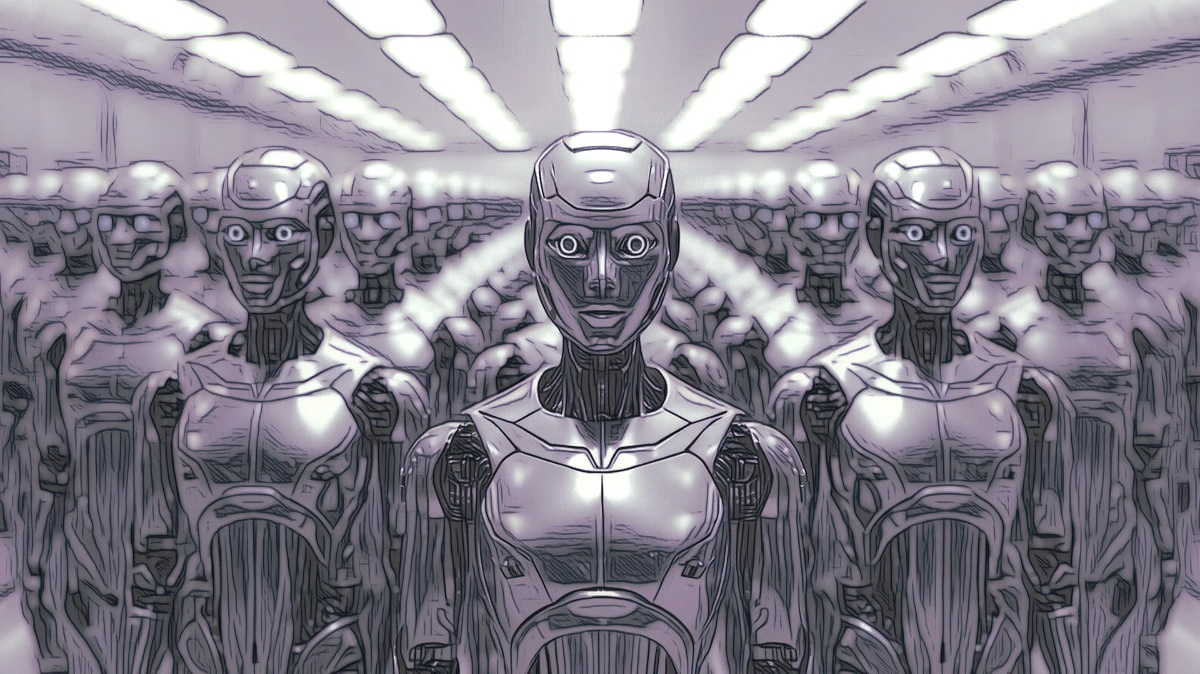
Everyone’s talking about AI automation replacing workers with autonomous robots. Lower payroll, higher margins, humans optional. It sounds efficient. But almost nobody asks the obvious question: produce what, for whom?
The loop everyone forgets
An economy is a loop, not a straight line. People work, people earn, people spend, businesses sell to people. Automation proposals cut out the “earn” part and assume the rest keeps running fine without it.
It doesn’t. Machines don’t buy cars. They don’t rent apartments or pay for dinner out. Every dollar cut from payroll is a dollar gone from demand. You can automate your way to a warehouse full of perfect products — and still have no one left who can afford to buy them.
Economists have a name for this: the paradox of automation. It usually gets waved away as something
“the market will figure out.” 🤬
It does, maybe — but usually after a painful correction, and the pain rarely lands on the people who own the robots.
The wrong AI models
Full automation without a plan to redistribute the resulting income isn’t a productivity story. But a wealth-concentration story wearing a productivity costume.
The efficiency gains are real. But
“the technology can do it all” was never a good enough reason to deploy it however fast, with no plan for the people left behind.
And this isn’t an AI problem — it’s the same demand-side blind spot that shows up whenever automation outpaces wages. AI just moves faster and cuts across more jobs at once, which means the usual decades-long adjustment window is shrinking fast.
The uncomfortable options
If a society wants full automation, it needs a real answer for the demand side. Here are some candidates (there aren’t too many around…):
– Shared ownership of the automated capital, so workers keep a stake in what machines produce.
– Direct income, funded by taxing the productivity gains automation creates.
– Slower deployment, matched to how fast new roles and safety nets can absorb displaced workers.
None of these is easy. All are more honest than betting everything on
“new jobs will show up eventually.”
☆☆☆
THE REAL FORK IN THE ROAD
Here’s the part worth sitting with: this technology could genuinely take humanity somewhere extraordinary. Freed labor, freed capital, freed attention pointed at fundamental physics, deep space, disease, the kind of long-horizon thinking that never survives a quarterly earnings call. That future is real and reachable.
But the same acceleration cuts the other way just as fast. In the hands of people driven by short-term greed and no larger vision, the exact same tools speed up the road to concentration, instability, and collapse rather than progress.
The technology doesn’t decide which road we’re on — the people steering it do, and on what time horizon they’re thinking. Someone optimizing for the next quarter and someone optimizing for the next generation will build two very different futures with the same machines.
That’s the real stakes of the automation question. It was never really about robots and factories. It’s about which of those two futures gets funded first.
The line that matters
You can automate the factory. You cannot automate the customer.
—
https://deocultatecnologia.com/2026/02/08/the-architect-of-chaos/
Leave a Reply