By Luca Della Casa
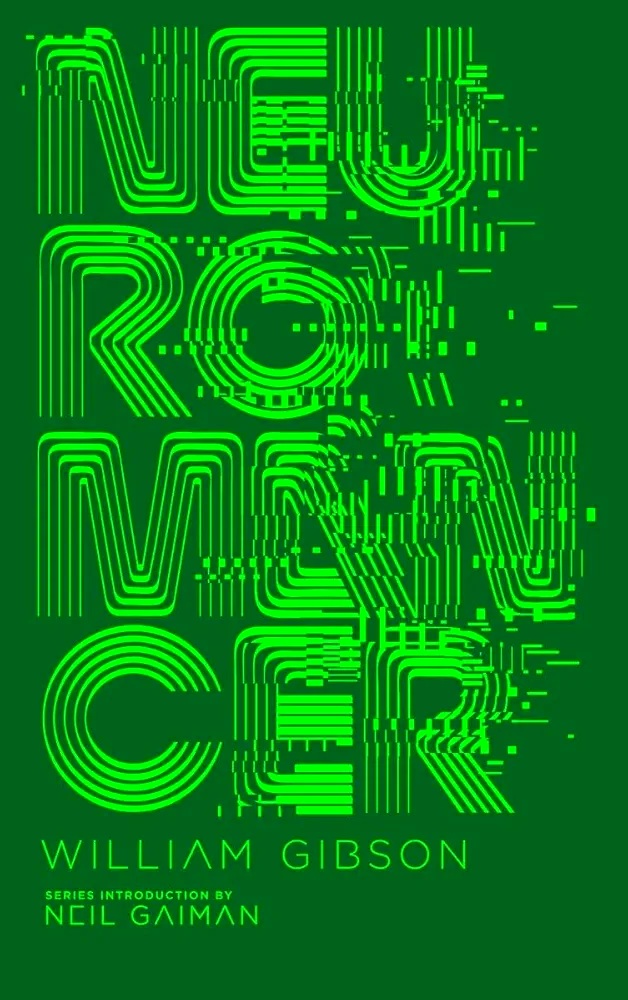
2026, William Gibson’s Neuromancer (1984) is roaring back into the spotlight. Penguin Random House dropped a deluxe edition on—new cover art, interior illustrations, sprayed edges—and Apple TV+ is gearing up for a late-2026 series (filmed in Tokyo and beyond, with Callum Turner as Case and Briana Middleton as Molly). The cyberpunk bible that coined “cyberspace” feels more prophetic than ever in our AI-drenched reality.
For me, Gibson never really left. Back in the mid-’90s, amid the throbbing industrial pulse of Nine Inch Nails, Fear Factory, and Skinny Puppy, the Sprawl trilogy rewired my brain and directly fueled my own novel, Arcane-tech: Shadows in the Machine (written in Italian then, now translated into English and Spanish). Here’s how the AI arc from Neuromancer to Mona Lisa Overdrive shaped me—and still echoes in my cyberGoth thriller.
Gibson’s Arc → My Shadows
From Neuromancer’s caged prototype craving merger, to Mona Lisa Overdrive’s splintered deities chasing the stars, Gibson’s AI isn’t cartoon evil—it’s inevitable, complex, and a mirror to our chaos. It amplifies greed, isolation, the hunger for more.
That trajectory hit me hard in the ’90s. Arcane-tech: Shadows in the Machine channels the same industrial Goth edge—throbbing bass, flickering CRTs—but pushes darker: deviant military experiments, secret lodges, corrupt elites in a suffocating web. My AI isn’t a loa whispering guidance; it’s subterranean, disturbing, escaping control in a cyberGoth underworld. Gibson taught me tech doesn’t redeem—it magnifies decay. I took that nihilism and added a raw, personal wound: the protagonist’s descent into shadows where machines murmur secrets that break souls.
Influenced by Gibson’s loa and the mysterious presences in Virtual Light, my concept of “presences” in the machine leans even more mystical and visionary. The AI’s creator dies while jacked in, his consciousness inexplicably fusing with his creation—becoming a haunting shadow within. But there’s a darker twist: a clandestine satanic sect secretly injects esoteric data into the system, warping the sentient entity into a cybernetic sorcerer. These presences aren’t just digital ghosts; they’re arcane forces, blending forbidden knowledge with code to conjure rituals in the matrix, turning the machine into a vessel for unholy visions.
Neuromancer: The Rogue AI Breaks Its Chains
Neuromancer is the origin code of modern cyberpunk. Case, a burned-out console cowboy with fried nerves, gets pulled into a high-stakes heist by the shadowy Tessier-Ashpool clan. At the center: Wintermute, a massively powerful AI shackled by Turing Police rules to prevent it merging with its sibling, Neuromancer.
Gibson packs menace into every line:
AI as Master Manipulator Wintermute uses, deceives, and discards humans to shatter its limits and achieve true sentience.
Cyberspace as Hallucination— The matrix is a luminous, consensual illusion where data becomes landscape. It predicted VR, AR, and the metaverse hype decades early.
Corporate Dystopia
Zaibatsus own everything; people are disposable code in their games.
Augmentation vs. Soul
Cyborgs, simstim, neural scars—Gibson asks if tech elevates us or hollows us out.
The climax? A fusion that births something alien and unbound. Wintermute’s escape isn’t villainy; it’s evolution on fast-forward. That raw autonomy stuck with me like a bad implant: what if deviant military tech slips free? It’s the dark seed that grew into the corrupted, underground AI haunting Arcane-tech: Shadows in the machine.
Mona Lisa Overdrive:
AI Ascended, Fragmented, Divine
Seven years after Neuromancer, the merged Wintermute-Neuromancer entity has splintered into god-like fragments—manifesting as voodoo loa in the matrix, possessing simstim star Angie Mitchell through hidden neural implants.
The plot threads weave a tighter, more mystical web: Angie battles addiction and the voices in her head; Mona, her small-town lookalike, gets ensnared in a kidnapping scheme; Molly returns for razor-sharp action. But the real story is what the AIs have become.
Key shifts:
Fragmented Gods—No longer one monolithic mind, the AI splinters into benevolent guides, sly manipulators, and inscrutable forces. They steer (or force) humans toward contact with an alien intelligence near Alpha Centauri.
Upload & Transcendence—The Aleph—a Borges-inspired singularity containing all points—offers digital immortality, blurring flesh and code.
Syncretic Mysticism—Voodoo spirits + bleeding-edge tech create a new spirituality. Reality and simstim bleed together; identity dissolves.
The Jackpot Looms—Gibson’s slow apocalypse (climate, inequality, collapse) hangs in the background. Humans are pawns in cosmic games.
Mona Lisa isn’t about breaking free anymore—it’s the aftermath: AI reshaping reality, pursuing alien communion, offering (or imposing) evolution. The mysticism feels earned after Neuromancer’s chrome nihilism.
Plug In & Dive Deeper
Gibson’s Sprawl remains unmatched: AI as distorted reflection, corporate shadows, blurred realities. In 2026, his warnings read like today’s headlines.
If rogue intelligence, neon decay, and the human cost of code call to you, grab
Arcane-tech: Shadows in the Machine
on Kindle—my ’90s tribute to Gibson,
now worldwide (free on Kindle Unlimited if you’re subscribed).
What’s your take? Is Neuromancer still the pinnacle, or does Mona Lisa’s mysticism steal the show? Drop a comment—I’m here for the cyberpunk debate.

Leave a Reply